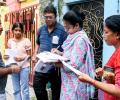
Delhi's Chief Electoral Officer, Ashok Kumar, announced the reverification of over 47 lakh voters whose names were removed from draft electoral rolls. This initiative addresses complaints of eligible voters being omitted and aims to ensure no genuine voter is left out before the final lists are published on December 4. Booth-level officers are resolving discrepancies and voters can fill Form 6 for inclusion.
The Election Commission has informed the Supreme Court that over 37 lakh appeals concerning deletions or inclusions in West Bengal's electoral rolls remain pending under the Special Intensive Revision. The apex court-appointed tribunals have disposed of only a fraction of the 38.20 lakh appeals filed, prompting the Supreme Court to seek data and a plan for streamlining the adjudication process.
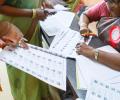
The Supreme Court of India resumed hearing petitions challenging the Special Intensive Revision of electoral rolls in Bihar, addressing the use of Aadhaar and concerns about voter deletions.
The Supreme Court has reserved its verdict on a petition challenging the Special Intensive Revision (SIR) of electoral rolls in Bihar, following arguments from various lawyers and the Election Commission of India.

The prominence of migration highlights a longstanding problem for India's electoral system.
The Election Commission will publish the draft electoral rolls for Bihar assembly polls, triggering a period for claims and objections amid fears of voter exclusion.
Following a Supreme Court directive, details of names deleted from Bihar's draft electoral rolls have been published online. The Election Commission defends the special intensive revision process.
The Election Commission (EC) has published the draft electoral rolls for Bihar, marking a key step ahead of the upcoming assembly elections. The publication follows a month-long Special Intensive Revision (SIR) exercise.
The Election Commission of India (ECI) asserts that major political parties participated in the Special Intensive Revision (SIR) of electoral rolls, deploying booth level agents despite opposing the exercise in the Supreme Court. The ECI defends its authority to conduct the revision to maintain the integrity of elections.

The Election Commission is set to publish the draft electoral rolls for West Bengal on Tuesday following the completion of the statewide Special Intensive Revision (SIR) ahead of the 2026 assembly polls. The publication of the draft rolls will mark the end of the enumeration phase and the beginning of a far more contentious stage - claims, objections and hearings that will stretch into February 2026.
The Supreme Court is scheduled to hear a batch of pleas challenging the Election Commission's decision to conduct a Special Intensive Revision (SIR) of electoral rolls in Bihar. Political parties and other petitioners have raised concerns about the revision process.

More than 2.06 crore electors, representing 21.14 per cent of Maharashtra's previous voter base, have been excluded from the draft electoral roll following a Special Intensive Revision (SIR) due to reasons like being untraceable, deceased, or having shifted residences.

Delhi's draft electoral rolls show a significant reduction in voters, with affluent constituencies experiencing a higher percentage drop (37.4%) compared to areas with unauthorised colonies and Jhuggi-Jhopdi clusters (35.7%). Overall, 47.5 lakh voters have been excluded, with officials noting Delhi's exclusion rate is the highest among states undertaking Special Intensive Revision. Citizens have until September 30 to file claims and objections before the final roll is published on November 4.

"There is bound to be revision," the top court said, "otherwise, how will the poll panel delete the names of those who are dead, migrated or shifted to other constituencies?"

Delhi's draft electoral rolls show a high percentage of voter exclusions, particularly in minority-dominated and SC-reserved constituencies. Overall, 33% of voters were deleted, with some areas like Okhla seeing up to 45% exclusions. The CEO office attributes most deletions to absent or shifted voters, who can re-register by September 30.

CJP spokesperson Ashutosh Ranka has reiterated the outfit's demand for CEC Gyanesh Kumar's resignation, alleging the exclusion of 13 crore names from electoral rolls and questioning the BJP's defence of Kumar. The CJP plans a nationwide protest starting October 2, vowing not to back down until Kumar resigns, and has launched the 'Election Commission Thik Karo' campaign. Ranka also accused the CEC of fraudulently redrawing constituencies in Assam to benefit the ruling party.

Former Chief Election Commissioner S Y Quraishi has strongly criticised the Election Commission's ongoing Special Intensive Revision (SIR) of electoral rolls, stating it is 'focussed more on exclusion' and has 'played havoc with democracy' by disturbing free and fair elections.
The Supreme Court has directed the Election Commission to provide details on the disposal of appeals by tribunals concerning deletions from West Bengal's electoral rolls during the Special Intensive Revision (SIR). The court emphasised the need to track the progress of these appeals, which were set up to address irregularities. It also clarified that grievances regarding the denial of PDS benefits due to voter deletion should be taken up with the Calcutta High Court.

Former civil servants and rights activists have issued a "people's impeachment" notice demanding the resignation of Chief Election Commissioner (CEC) Gyanesh Kumar. They allege six charges against him, including undermining the Election Commission's functioning, mass disenfranchisement through Special Intensive Revision (SIR) of electoral rolls, and compromising political impartiality. The group, including G K Pillai and Najeeb Jung, was prevented from submitting the notice at the EC office.

A report by 'Voter Adhikar Manch' has revealed that the number of excluded electors in Delhi's draft electoral roll under the Special Intensive Revision (SIR) exceeded the winning margin in 68 of 70 Assembly constituencies in the 2025 polls. The audit found over 47 lakh electors marked as absent, shifted, dead, or duplicate, raising serious questions about the integrity of the electoral process and the accuracy of voter lists.

The Cockroach Janta Party (CJP) has called for the resignation of Chief Election Commissioner Gyanesh Kumar, alleging he has 'undermined' voter rights by excluding over 13 crore names from draft electoral rolls across 30 states and Union territories during the Special Intensive Revision (SIR) exercise.

The Delhi High Court has ruled that Booth Level Agents (BLAs) of political parties are not liable for false details in electoral enumeration forms that cannot be personally verified. The court clarified that BLAs are only responsible for verifiable information, such as an elector's photograph, and struck down the Election Commission of India's mandate requiring BLAs to provide personal undertakings for all details.

Harvard trained lawyer Shahdan Farasat's detention by the Delhi police at Saturday's protest has ignited a crucial debate on the shrinking space for peaceful dissent and the protection of democratic rights.
'Why are we deliberately taking apart an electoral system that has worked?' 'There is no answer to that, and there is no data and has never been any on the absurd slander that foreigners are voting here,' asserts Aakar Patel.
Leaders of several INDIA bloc parties met the Election Commission over the Special Intensive Revision of electoral rolls in Bihar and raised concerns over its timing, alleging that over two crore voters of the state may be disenfranchised by this mammoth exercise being done just ahead of assembly elections.

When it pretends to be deaf, a situation can snowball into something it cannot contain. The government cannot dismiss public anger merely because protests are inconvenient or politically embarrassing, asserts Ramesh Menon.

The Maharashtra Navnirman Sena (MNS) and Shiv Sena (UBT), led by Raj and Uddhav Thackeray, are organising a mass protest march in Mumbai on October 4 against the Election Commission. They accuse the EC of acting as a "branch of the ruling party" and allege "gross deception" of voters, calling for broader political and public participation.

A group of 124 former IAS, IFS, IPS, and allied services officers have issued an open letter defending the Election Commission (EC) and the Special Intensive Revision (SIR) process. They argue that the electoral system cannot be deemed rigged only when a party loses, citing instances where the ruling BJP lost elections under the same EC. The officers highlight the legitimacy and necessity of the SIR for cleaning voter rolls and underscore the robust safeguards within India's electoral system.
The Supreme Court of India has upheld the Election Commission's documentation framework for the Special Intensive Revision of electoral rolls, affirming the commission's authority and stating that Aadhaar is not proof of citizenship.
The upcoming publication of West Bengal's electoral rolls is expected to intensify political tensions and debates ahead of the Assembly elections, reflecting concerns about voter inclusion and identity.
The Supreme Court declined to initiate an inquiry into alleged voter roll irregularities in West Bengal, stating it would amount to a 'fishing inquiry'. The court's decision came after concerns were raised about the addition of a significant number of voters ahead of the state's Assembly elections.

Sharma claimed he has received complaints that neither any virtual nor any physical meeting was held to finalise the electoral rolls, the sources said.

The pleas challenging SIR claimed that the Election Commission does not have powers under Article 326 of the Constitution, the Representation of the People Act, 1950 and the Rules made under it to carry out SIR in a larger form.

A bench comprising Chief Justice Surya Kant and Justices Joymalya Bagchi and N V Anjaria said it would issue whatever orders or clarifications are required in the matter.

The Supreme Court has stated it will intervene if there is mass exclusion in the special intensive revision of electoral rolls in Bihar, emphasizing the Election Commission's role as a constitutional authority.

The Supreme Court has directed the establishment of independent appellate tribunals, led by former high court judges, to address appeals related to voter list exclusions in West Bengal, while also cautioning against undermining judicial officers involved in the process.

A Calcutta High Court judge, Gaurang Kant, disclosed that his elder brother is a national spokesperson for the BJP while hearing Mamata Banerjee's petition challenging the Bhabanipur assembly seat poll result. Despite the disclosure, Banerjee's lawyer expressed full confidence in the judge.

Amidst ongoing ethnic tensions, a new political alignment in Manipur sees Meitei and Naga groups uniting to demand an update to the National Register of Citizens with a 1951 base year, a move fiercely opposed by Kuki-Zo communities who fear it will disenfranchise them.

Sonia Gandhi's counsel argued in a Delhi court that a complaint alleging she was included in the electoral roll before acquiring Indian citizenship was politically motivated.
The Election Commission of India clarified that claims, objections, and corrections to the draft electoral roll in Bihar's special intensive revision exercise can be filed beyond September 1, but will be considered after the roll is finalized. The Supreme Court directed assistance for voters and parties in filing claims.
